Why Is My Dog Scooting?
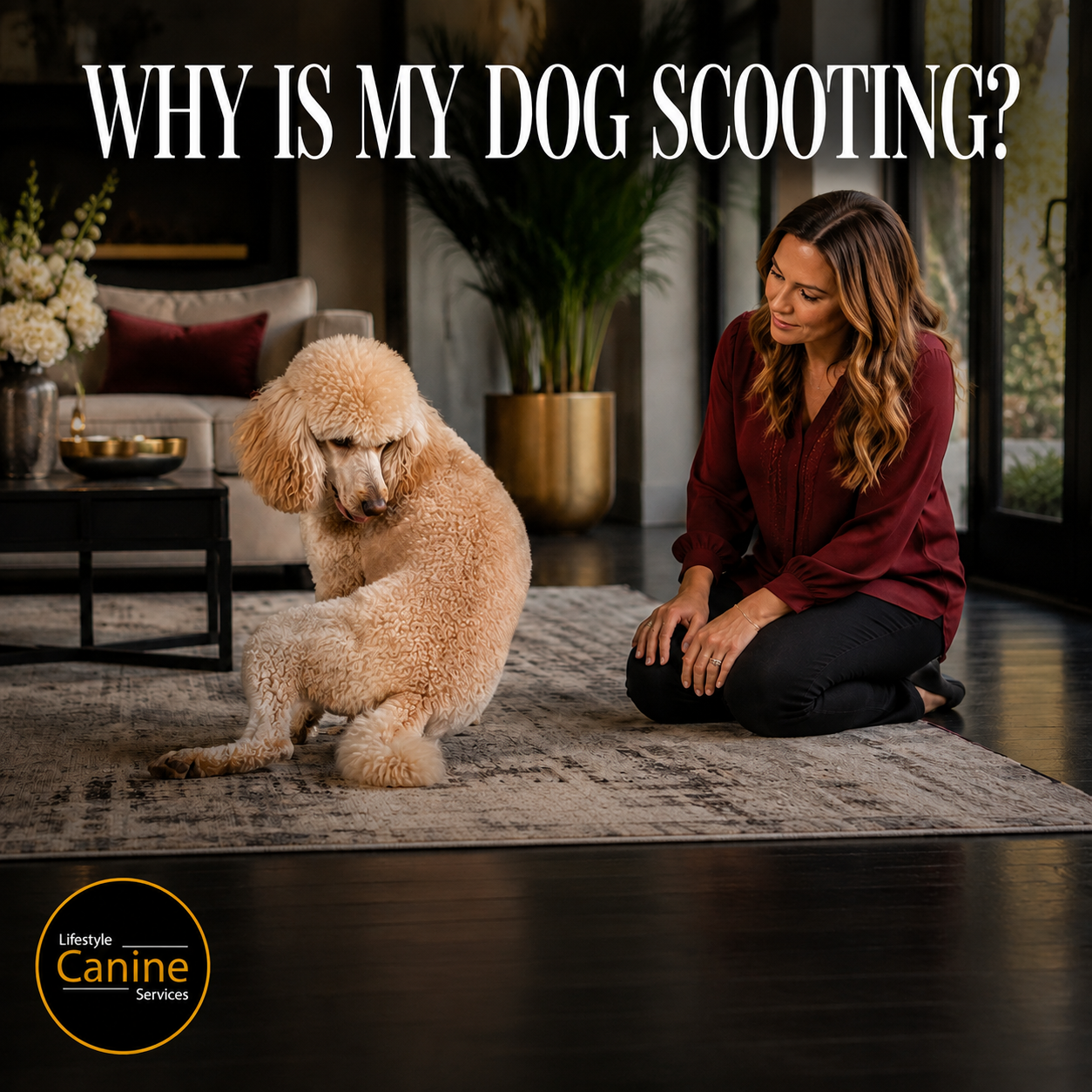
A dog suddenly dragging its rear across the carpet may look comical or embarrassing.
But scooting is usually not meaningless behavior.
The dog is commonly attempting to relieve itching, pressure, inflammation or pain around its rear. One brief scoot may follow a bowel movement or reflect temporary irritation. Repeated scooting, persistent licking, a fishy odor or visible discomfort deserves closer attention.
Anal-sac trouble is a frequent cause, but it is not the only possibility.
Responsible care means looking at the dog’s complete condition—including stool quality, skin health, grooming, weight, diet, parasites and behavior—rather than assuming every scooting dog simply needs its glands expressed.
What Exactly Is Scooting?
Scooting occurs when a dog places its rear against the ground and pulls itself forward using the front legs.
Dogs may scoot across:
Carpet
Rugs
Grass
Bedding
Upholstery
Concrete
Tile
Other textured surfaces
The behavior creates friction against an area the dog cannot easily scratch.
Scooting should be treated as a symptom. The important question is not simply how to stop the movement, but what is making the dog uncomfortable.
What Are Anal Sacs?
Dogs normally have two small anal sacs positioned just inside the anus.
These sacs contain strong-smelling fluid. Under normal circumstances, pressure produced during a bowel movement helps release a small amount of that material.
Owners may never notice the glands when they function properly.
Problems can develop when the sacs do not empty adequately. The material may become thicker, and the sacs may become:
Overfilled
Impacted
Inflamed
Infected
Abscessed
The resulting pressure or pain can cause scooting, licking, biting at the rear or reluctance to sit normally.
Signs of a Possible Anal-Sac Problem
Scooting is one recognizable sign, but owners should watch for the complete pattern.
Possible signs include:
A strong fishy odor
Persistent licking beneath the tail
Biting at the hindquarters
Sudden attention to the rear
Difficulty sitting comfortably
Pain during defecation
Straining
Holding the tail unusually
Swelling beside the anus
Red or discolored skin
Blood or pus
A draining wound
Irritability when the tail or rear is touched
Anal-sac disease can be painful. Even a normally social, tolerant dog may growl, snap or attempt to escape when the area is handled.
That reaction should not automatically be labeled a training failure. Pain can change behavior immediately.
Scooting Does Not Always Mean Full Anal Glands
Several problems can create similar behavior.
Allergies and Skin Inflammation
Environmental or food-related allergies may cause inflammation around the rear. Allergic inflammation can also contribute to recurring anal-sac trouble in some dogs.
Look for additional signs such as:
Itchy paws
Ear inflammation
Red skin
Recurrent skin infections
Belly irritation
Seasonal flare-ups
Persistent licking
A dog with several itchy areas needs a broader veterinary evaluation instead of repeated treatment of the rear alone.
Parasites
Tapeworm segments can irritate the anus and may be visible around the dog’s rear or bedding. Fleas and other parasites can also contribute to itching.
Scooting does not automatically prove that a dog has worms, however. Appropriate testing and veterinary guidance are preferable to guessing or repeatedly administering unnecessary medication.
Stool Residue and Grooming Problems
Soft stool or diarrhea may become trapped in long coat around the anus. Mats can pull at the skin, hold moisture and conceal redness, wounds or parasites.
Dogs with long, curly or dense coats require consistent sanitary grooming. The area should be clean and easy to inspect without shaving so aggressively that the skin becomes irritated.
Digestive Changes
Recurring soft stool may reduce the natural pressure involved in emptying anal sacs.
Changes in stool can be associated with:
Sudden food changes
Dietary indiscretion
Excessive treats
Food intolerance
Parasites
Gastrointestinal illness
Medication
Stress
Other medical conditions
Adding fiber without understanding the dog’s diet, hydration and medical condition is not always appropriate. Dietary changes should be discussed with the veterinarian, particularly when diarrhea, constipation or recurring anal-sac problems are present.
Foreign Material or Irritation
Grass, plant material, dirt, grooming products or dried stool may irritate the area.
An owner may gently inspect the exterior when the dog can be handled safely, but should not insert anything into the rectum or attempt to remove an object that appears embedded.
Growths and Other Medical Conditions
Masses around the anus or within an anal sac can sometimes produce scooting, swelling, difficulty defecating or increased licking.
Although tumors are not the most common explanation, new lumps, asymmetry or recurring one-sided problems should be evaluated by a veterinarian.
Should Every Dog Have Its Anal Glands Expressed Regularly?
No.
Many dogs empty their anal sacs normally and do not require routine manual expression.
Unnecessary or excessively frequent expression may irritate the area. It can also create a cycle in which the underlying reason for recurring discomfort is never properly investigated.
Some individual dogs do need periodic assistance because of anatomy, chronic inflammation or a history of impaction. That schedule should be based on the dog’s actual needs and veterinary recommendations—not applied automatically to every dog.
If the sacs are painful, infected, difficult to empty, producing abnormal material or repeatedly causing trouble, veterinary evaluation is appropriate.
Grooming Can Reveal the Problem—but Not Diagnose It
A skilled groomer may be the first person to notice:
A fishy odor
Rear-end sensitivity
Swelling
Excessive licking
Skin discoloration
Mats trapping moisture or stool
A change from the dog’s normal response
This observation is valuable, but visible signs cannot determine every underlying cause.
Grooming also should not continue over an area that appears severely inflamed, swollen, bleeding or painful. The dog may need veterinary treatment before routine grooming can be completed safely.
The groomer, trainer, owner and veterinarian have different roles. Good canine lifestyle care respects those boundaries while using information from each professional.
Why Scooting Can Become a Behavior and Handling Problem
The underlying trigger may be medical, but repeated discomfort can affect behavior.
A dog may begin to:
Avoid sitting
Resist being touched
Guard the hindquarters
Spin toward the handler
Flee from grooming
Refuse to enter the bathing area
Become reactive when the tail is lifted
Hide when the owner approaches with cleaning supplies
Associate veterinary or grooming environments with pain
Address the medical cause first.
Once pain and inflammation have been treated, the dog may still require structured handling work to rebuild tolerance. This is where balanced professional guidance becomes relevant.
The dog should learn to stand calmly, accept appropriate touch and remain manageable. At the same time, handlers must respect legitimate pain and avoid repeatedly forcing the dog through an inflamed or injured area.
Clear expectations and humane medical awareness belong in the same plan.
What Owners Should Not Do
Do not:
Punish the dog for scooting
Assume the behavior is attention-seeking
Repeatedly express the glands without determining why the problem returns
Insert tools or fingers without proper training
Squeeze a swollen or extremely painful area
Apply human creams or medications without veterinary guidance
Give dewormer solely because the dog scooted
Make abrupt high-fiber dietary changes without considering the full diet
Ignore blood, pus, swelling or a wound
Place your face or hands near the rear of a dog showing defensive behavior
Covering the carpet or interrupting the dog may protect the surface temporarily, but it does not address the discomfort causing the behavior.
When to Contact Your Veterinarian
Schedule a veterinary examination when:
Scooting occurs repeatedly
A fishy odor persists
The dog frequently licks or bites the area
Defecation appears painful
Stool quality has changed
The dog resists sitting
The problem keeps returning
There is a lump or asymmetry
The dog becomes defensive when touched
Seek prompt veterinary care for:
Visible swelling
Blood or pus
A draining wound
Severe pain
Fever or lethargy
Inability to pass stool
Significant straining
Sudden weakness
Rapidly worsening symptoms
An abscess may rupture through the skin. Waiting for the gland to “empty itself” is not a safe treatment plan when infection or severe pain is present.
Supporting Better Anal-Sac Health
Depending on the cause, the dog’s long-term plan may involve:
Treating infection or inflammation
Addressing allergies
Parasite prevention or treatment
Improving stool consistency
Reviewing the diet
Supporting an appropriate body weight
Maintaining sanitary grooming
Monitoring recurring symptoms
Veterinary rechecks
Structured cooperative-care training
There is no single universal supplement, food or expression schedule that solves every case.
The plan should match the individual dog.
Body Weight and Activity Matter
Excess body weight can make grooming, self-cleaning and physical examination more difficult. It may also accompany low activity and digestive changes that affect the dog’s overall condition.
Appropriate exercise supports:
Healthy body composition
Regular elimination
Muscle condition
Daily routine
Owner observation
General physical and emotional wellness
Exercise does not treat an infected anal sac. However, weight management, consistent meals, predictable elimination and regular observation are all part of maintaining the complete dog.
What Owners Can Do
ANYTIME the steps in our blog posts are beyond your ability to follow, or you struggle to facilitate them, schedule an in-person consultation with Canine Lifestyle Services. We can help with cooperative handling, grooming tolerance, daily structure and behavior that makes necessary care difficult.
Record how often the dog scoots.
Note whether it happens before or after a bowel movement.
Monitor stool consistency.
Watch for licking, odor, swelling or discharge.
Inspect the exterior only when the dog can be handled safely.
Keep long coat around the sanitary area clean and maintained.
Discuss recurring problems with the veterinarian.
Maintain a consistent, appropriate diet.
Avoid excessive treats and abrupt food changes.
Keep parasite prevention and testing current according to veterinary recommendations.
Maintain an appropriate body weight.
Do not punish discomfort-related behavior.
Address handling resistance after pain has been evaluated.
Seek professional help before defensive behavior escalates into a bite.
The Owner’s Role
The owner sees the dog’s daily habits more consistently than anyone else.
Notice:
How the dog sits
How frequently it eliminates
Whether stool is consistently soft
Whether the dog strains
When licking begins
Whether the odor is new
Whether the problem follows grooming
Whether the dog reacts to touch
Whether symptoms are recurring
These details help the veterinarian identify patterns and may reveal that the issue involves more than one system.
The owner also controls whether the dog learns to accept routine inspection and handling. Cooperative care should begin while the dog is comfortable—not after a painful problem develops.
The Canine Lifestyle Perspective
At Canine Lifestyle Services, scooting is not viewed in isolation.
The complete picture includes the dog’s skin, coat, diet, stool quality, body condition, grooming schedule, tolerance of handling, household structure and veterinary history.
A medical problem should not be treated as disobedience. At the same time, once medical needs are addressed, a dog should be taught to cooperate safely with appropriate handling and care.
If your dog cannot be examined, groomed or managed safely—or defensive behavior makes necessary care difficult—schedule an in-person consultation with Canine Lifestyle Services. We can evaluate the dog’s behavior directly and develop a practical cooperative-care plan that complements veterinary treatment.
For continued education and owner discussion about canine behavior, grooming, wellness and practical daily structure, join the Canine Lifestyle Services App.
If you or someone you know could benefit from professional canine training and lifestyle support, please share Canine Lifestyle Services.