Is Your Dog Misbehaving—or Overtired?
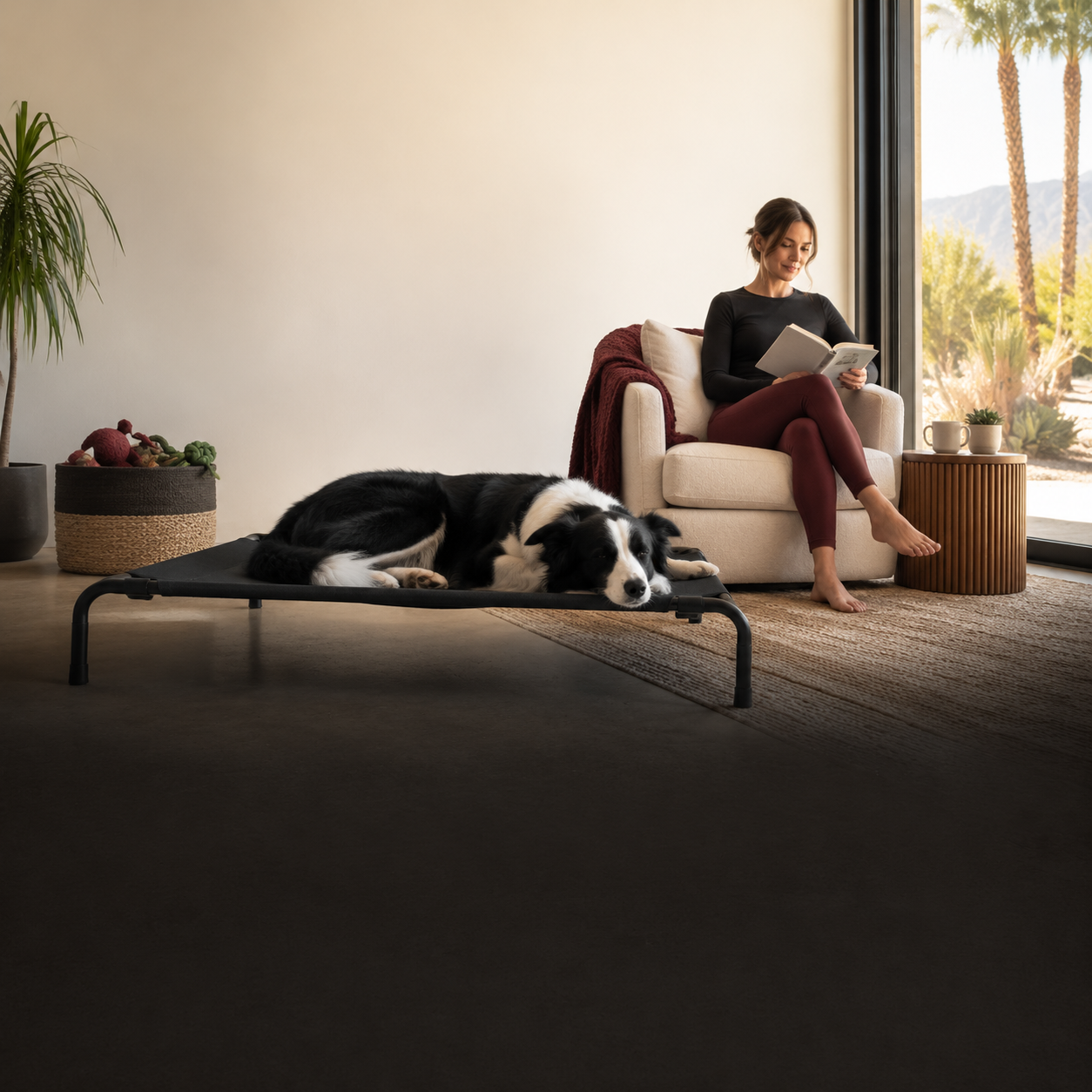
When a dog becomes mouthy, destructive, restless, reactive or seemingly unable to listen, the owner’s first assumption is often that the dog needs more exercise.
Sometimes that is true.
However, continually adding physical activity is not always the answer. In some dogs, especially puppies and naturally intense breeds, more activity can increase arousal without teaching the dog how to recover from it.
The behavior owners describe as stubbornness, excessive energy or aggression may sometimes be an overtired dog that no longer knows how to settle.
Sleep Is Part of Your Dog’s Behavior Program
Sleep is not simply the time between training sessions. It is a critical part of a dog’s physical recovery, emotional regulation, learning and overall behavior.
Dogs do not always sleep in one long, uninterrupted period. They rest throughout the day and frequently move between light sleep, deeper sleep and alertness. Household activity, noise, children, other animals and a dog’s own inability to disengage can repeatedly interrupt that rest.
A dog may appear to have been lying down for several hours without receiving several hours of restorative sleep.
This distinction matters.
A dog who keeps lifting their head whenever someone moves, follows family members from room to room, patrols windows or repeatedly responds to household sounds is resting differently from a dog who feels safe enough to sleep deeply.
How Much Sleep Does a Dog Need?
There is no single number that applies to every dog.
Sleep requirements are affected by:
Age
Breed and genetics
Physical activity
Mental workload
Health
Household environment
Stress levels
Quality of the dog’s sleeping area
Whether the dog’s rest is repeatedly interrupted
Adult dogs commonly sleep for a substantial portion of the day. Puppies and senior dogs usually need even more.
Puppies are processing constant new information while their bodies and nervous systems develop. Senior dogs may tire more quickly and need additional recovery. Large dogs may also sleep longer than some smaller dogs.
Rather than becoming fixated on an exact number of hours, owners should evaluate the quality of the dog’s rest and the behavior that appears when the dog has not received enough of it.
Signs Your Dog May Be Overtired
An overtired dog does not always look sleepy. Many dogs become more active, impulsive and difficult to manage.
Possible signs include:
Evening zooming or frantic movement
Increased puppy biting or grabbing at clothing
Barking at minor sounds
Repeatedly pestering people or other dogs
Difficulty following familiar instructions
Poor impulse control
Destructive chewing
Restlessness despite physical exercise
Inability to remain on Place
Jumping, spinning or pacing
Increased sensitivity to handling
Escalating frustration during play
Sudden irritability around children or other animals
Falling asleep almost immediately when finally given structured quiet time
These behaviors can have many causes. Sleep deprivation should not automatically be treated as the explanation, but it deserves consideration as part of the complete evaluation.
The Overexercise Trap
Owners frequently attempt to solve an overstimulated dog by exhausting them.
They add longer walks, more fetch, more daycare, additional play sessions and constant entertainment. The dog becomes physically tired but remains emotionally activated.
Over time, this may create a dog with greater endurance and no better ability to settle.
Physical activity is important, but it should be part of a balanced routine that also includes:
Mental engagement
Training
Household structure
Calm social interaction
Appropriate independence
Uninterrupted recovery
Clear transitions between activity and rest
A complete canine lifestyle teaches the dog both how to engage and how to disengage.
Why Puppies Become “Little Monsters” at Night
Many puppy owners recognize the evening period when their puppy suddenly begins racing through the house, biting hands, stealing objects and ignoring everything previously learned.
Owners may believe the puppy needs another intense play session. In reality, the puppy may have already exceeded its ability to process more stimulation.
Just like an overtired child, an overtired puppy does not necessarily put itself calmly to bed. It may become louder, more impulsive and less capable of making good decisions.
This does not mean every evening behavior is caused by fatigue. Puppies still need appropriate exercise, training and outlets. But the timing and pattern often reveal whether the puppy requires more activity—or a structured opportunity to rest.
Adult Dogs Can Accumulate Sleep Debt Too
Sleep problems are not limited to puppies.
Adult dogs living in busy homes may receive less uninterrupted sleep than their owners realize. This is especially common when:
Children repeatedly approach the resting dog
Multiple dogs constantly disturb one another
The dog follows the owner everywhere
The dog patrols doors and windows
The television or household remains active late into the night
The dog spends the day responding to outdoor sounds
The dog attends stimulating daycare or group activities frequently
The dog has no protected place where it can fully disengage
A dog that remains near the top of its arousal threshold may react more intensely to the next sound, visitor, dog or handling interaction.
The final event may appear to be the cause, but accumulated stress and inadequate recovery may have reduced the dog’s ability to cope.
Structured Rest Is Not Punishment
Giving a dog a designated rest period does not mean banishing or ignoring the dog.
Structured rest means creating an environment where the dog can safely disengage without being repeatedly stimulated.
Depending on the dog, this may involve:
A Place bed in a quiet part of the home
A properly introduced crate
A gated room
Reduced visual access to windows
Separation from active children or other animals
Lower household noise
A predictable transition after training or exercise
Teaching the dog that it does not need to follow every movement
The resting area should be appropriate for the individual dog. A dog who experiences serious confinement distress requires a carefully developed plan rather than being abruptly shut away.
What Owners Can Do
ANYTIME the steps in our blog posts are out of your ability to follow, or you struggle to facilitate them, seek professional training. A qualified trainer can help determine whether the dog needs improved structure, better activity choices, a calmer recovery routine or a more complete behavioral evaluation.
Observe when the behavior occurs. Record the dog’s activities, naps and challenging behavior for several days.
Look at sleep quality, not just the amount of time the dog spends lying down.
Create predictable activity and recovery periods rather than allowing continuous stimulation.
End intense play while the dog can still think and respond.
Use calm transitions after walks, play and training.
Provide a designated resting area where people and other animals will not disturb the dog.
Teach children to leave sleeping dogs alone.
Avoid repeatedly waking or touching a dog during deep sleep. Startling a sleeping dog can produce a defensive reaction.
Do not assume that every difficult behavior requires more exercise.
Contact your veterinarian if your dog’s sleeping pattern changes suddenly or is accompanied by pain, weakness, appetite changes, breathing problems, disorientation or unusual lethargy.
If your dog remains unable to settle or the behavior creates safety concerns, revisit the situation with a professional trainer rather than continuing to add more physical exhaustion.
Sleep Does Not Replace Training
Sleep is important, but it should not become an excuse for unaddressed behavior.
A well-rested dog still requires:
Clear household expectations
Reliable communication
Appropriate boundaries
Consistent follow-through
Mental and physical outlets
Training around distractions
Owner involvement
The purpose of considering sleep is not to explain away behavior. It is to ensure that the dog is physically and emotionally capable of participating in the training process.
A dog that is continually overstimulated or exhausted will struggle to learn. A dog that receives appropriate activity, structure and recovery is in a better position to make good decisions.
The Canine Lifestyle Perspective
At Canine Lifestyle Services, behavior is evaluated as part of the dog’s complete life.
We consider the relationship between training, rest, activity, environment, genetics, health and owner habits. A dog’s difficult behavior rarely exists in isolation, and successful change requires more than addressing the moment when the dog finally loses control.
If your dog is constantly restless, increasingly mouthy, unable to settle or becoming difficult to manage at predictable times, schedule an in-person consultation with Canine Lifestyle Services. We can evaluate the complete daily pattern and determine what your dog needs from both training and lifestyle structure.
For continued education and discussion about canine behavior, training, wellness and the owner’s role, join the Canine Lifestyle Services App. . (ANDROID | iOS )
If you or someone you know could benefit from professional canine training and lifestyle support, please share Canine Lifestyle Services.